Search This Blog

Showing posts with label Democracy. Show all posts

Tuesday, April 21, 2020

"National Cabinet" not Cabinet as we have known it


Explainer: what is the national cabinet and is it democratic?
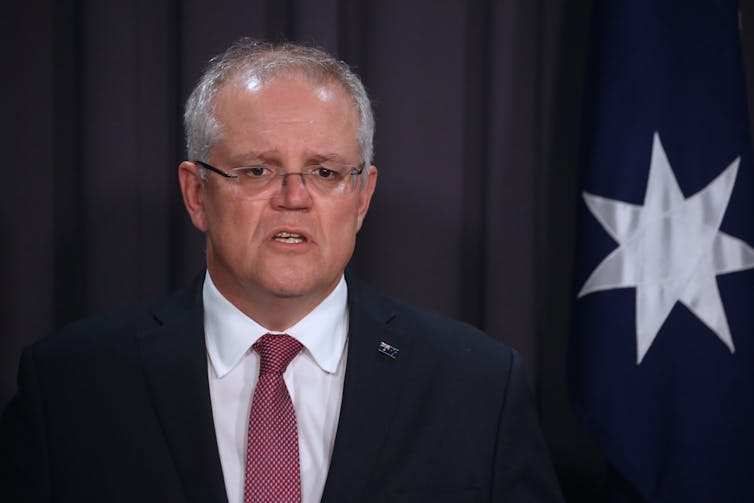

AAP/Mike Bowers
Jennifer Menzies, Griffith University
Crises pose particular challenges for democratic leaders. They are expected to make critical decisions in times of uncertainty and rapidly develop effective plans to lead us out of the crisis. Normally, we are more interested in constraining our leaders through the checks and balances of accountability. But in times of crisis, we look to our leaders to lead. Finding the right balance between accountability and rapid decision-making remains a challenge during an era of reduced trust in political leaders.
In Australia, the establishment of the national cabinet has undertaken this crisis leadership role.
The national cabinet comprises the prime minister and all state and territory premiers and chief ministers. Basically, it is COAG by another name.

Read more: 'Where no counsel is, the people fall': why parliaments should keep functioning during the coronavirus crisis

Though called a cabinet, the national cabinet is technically an intergovernmental forum. The conventions and rules of cabinet, such as cabinet solidarity and the secrecy provisions, do not apply to the national cabinet.
Its power is that which the leaders of all Australian jurisdictions bring to negotiate on behalf of their people, and to implement the decisions reached. This model is called executive federalism.

Advantages of executive federalism in a time of crisis

In a crisis, decision-making automatically shifts upwards with the expectation that leaders will work together to find a way through the crisis. The National Cabinet meets these expectations in several ways.

Timeliness and risk
Response time is critical, and with the national cabinet meeting multiple times a week, issues can be addressed as they emerge. Risk is reduced by bringing together technical and political experts.
The national cabinet is supported by the chief medical officers, who meet as the Australian Health Protection and Principles Committee (AHPPC). They pull together the modelling, research and data that form the basis of decisions made by the national cabinet.

Read more: View from The Hill: A contest of credible views should be seen as useful in a national crisis

The national cabinet is the mechanism to bring together information and intelligence sharing, and the capacity to pool and test ideas before locking in coordination and jurisdictional capacity.
Because of the frequency of meetings, decisions are expected and made. The consideration of different jurisdictional viewpoints and expertise puts rigour and contestability into the decision-making and strengthens the outcome.

Clarity and coherence
In a time of national crisis, agreement on a plan of action and then rapid and effective implementation is crucial. The national cabinet brings that focus. By putting aside their “politics as usual” squabbles the leaders demonstrate their desire for agreement and unity and communicate that firmness of purpose to the community at large.

Though the search for unity can be overborne by local circumstances. Some states moved earlier to introduce restrictions and shutdowns outside of the national cabinet. Though criticised for breaking ranks, the premiers were reacting to the different circumstances and anxiety within their jurisdiction. They decided to trade off the perception of a loss of unity against the need to create local responses for local circumstances.

Dual democracy
The national cabinet helps reconcile the dual allegiances citizens have to the national government and their state or territory government. People are looking for a coherent national approach through the crisis, but they do not want to see their individual jurisdiction to be disadvantaged compared to the rest of the country. At the national cabinet, the smaller states have equal representation, whereas in parliament their representation is proportionate to their population size.

Is it anti-democratic?
Executive federalism forums such as the national cabinet can be criticised for being undemocratic and unaccountable, with the role of the parliament marginalised. However, these forums are undertaking different roles. The national cabinet deals with negotiation and compromise between states, which recognise difference and diversity. The parliament is about majority will.
The connection has not been lost with parliament, which is suspended not pro-rogued, and will be brought back to pass legislation from decisions made by the national cabinet.

Once the COVID-19 crisis has passed, the full democratic accountability processes can scrutinise the decisions taken. This includes parliamentary committee investigations and royal commissions. The checks and balances of the democratic constraints on our leaders will reassert themselves.The Conversation


Jennifer Menzies, Principal Research Fellow, Policy Innovation Hub, Griffith University
This article is republished from The Conversation under a Creative Commons license. Read the original article.

Wednesday, September 18, 2013

Democracy more than a ballot in the box

International Day of Democracy, 15 September, passed peacefully and largely unnoticed here except if you were at the Museum of Australian Democracy in old Parliament House in Canberra. 

The UN General Assembly, in resolution A/62/7 (2007) encouraged Governments to strengthen national programmes devoted to the promotion and consolidation of democracy.

We of course were 'in between' governments on the day, readying for a peaceful transfer of power as a result of our own exercise of democratic rights on 7 September.

But hopefuly someone in Canberra noted the message from UN Secretary-General Ban Ki-moon about the need to strengthen people’s voices in how they are governed:
“Despite advances in civic engagement, apathy has become democracy’s most insidious enemy in a growing number of societies... Inclusive participation is the antidote,” he said, underscoring that such inclusivity is not only an end in itself; it prepares communities, societies and entire countries to address opposing points of view, forge compromises and solutions, and engage in constructive criticism and deliberations. “Inclusive participation helps communities develop functioning forms of democracy for Government, corporations and civil society,” Mr. Ban said.
The Abbott Government could start well by reiterating the commitment to join the Open Government Partnership:
a global effort to make governments better. We all want more transparent, effective and accountable governments -- with institutions that empower citizens and are responsive to their aspirations. But this work is never easy. It takes political leadership. It takes technical knowledge. It takes sustained effort and investment. It takes collaboration between governments and civil society.
Membership, and a national action plan with concrete commitments to improve on a number of fronts should be right up the alley of a government determined to restore trust!

Thursday, April 18, 2013

Australian democracy in good shape says Economist IU

Ahh, perspective, perspective.

You won't hear much about this from those lamenting that a hung parliament doesn't work, or in media that caters to the 'democracy is dead' crowd.

The Democracy Index 2012 (Download here) published by The Economist Intelligence Unit has Australia 6 (New Zealand 5) in ranking democratic practices in 167 countries. Both at the top end of the 25 that make it into the Full Democracy category.

We can all point to plenty of "could do much better" examples but Australia's overall score (9.22/10) based on 60 indicators, hasn't changed for three years. The methodology and the sixty indicators are at page 29. Strangely none drill down too far on transparency and accountability.

Friday, August 03, 2012

Democracy-Can we be Optimistic?

I'm on a panel discussing this at the Northside Forum tomorrow with Professor Johnathon Keane of the University of Sydney and Matthew Thompson NSW Editor of The Conversation. Free, at  the Union Hotel Pacific Highway North Sydney 12-2pm if you have the time and interest. 

Should the size of the turnout determine the answer? 

(Update: 65 on a beautiful Saturday afternoon in Sydney with lots of competing attractions helps to confirm the topic is of interest.The discussion also confirmed, contrary to the ongoing campaign by Allan Jones, that democracy isn't dead, or at least that's what John Keane and I and most in the audience took away. Matthew Thompson, and I'm paraphrasing here suggested most people just want to enjoy life and democracy doesn't excite or warrant attention unless you live under a tyrant. Hmm..


In brief, my take was
  • our democracy has good bones but could do with a few large transplants and supplements, to mention just two, better rules and more disclosure regarding political donations and lobbying. Despite recent rumblings from some of our home-grown muti-millionaires we're nowhere near the situation in the US where the Citizen United decision seems to open the door to billionaires to do their best to buy the election.
  • democracy is no steady state and needs a lot of nurturing and close attention from an informed and engaged citizenry. Now that's an area where the people need to lift the game. We wouldn't rate too high on John Keane's "monitory democracy" scale.
  • no-one should think democracy automatically produces able, intelligent representatives and leaders. With occasional aberrations in fact, mediocre is the word that mostly comes to mind after running over those mentioned in Nick Bryant's recent article on the Global Mail. (As Bryant points out Andrew Leigh Member for Fraser in the ACT appears to be one of those exceptions. Read this recent speech for clear signs of intelligent, reasoned public thinking The Naked Truth? Media and Politics in the Digital Age.)