Go figure!
Despite the fact they share a common goal and are complimentary in important respects.
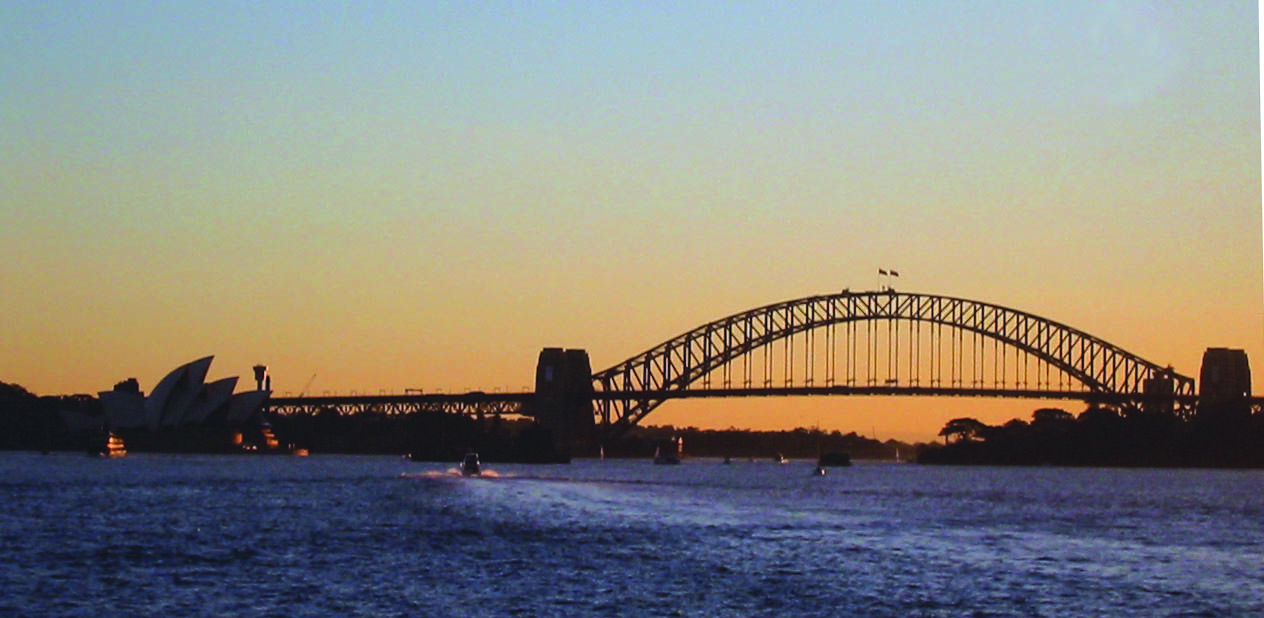
But still an eye-opening day for me at the Extractive Industries Transparency Initiative Beyond Transparency Conference in Sydney today. Thirteen hundred delegates from 95 countries with 40 signed up to the EITI,11 years after the initiative kicked off. All gathered together at a wonderfully pleasant Sydney venue. Quite a few deep pockets behind all this including AusAID I expect. Not knocking it but makes you think the OGP could do with a kick along of similar proportions.
Presentations were particularly instructive about the complications involved in trying to make a multi-stakeholder - government - business - CSO framework work, highly relevant to our own path towards a national OGP action plan.
Transparency was mentioned hundreds of times in the course of the day - twenty times by Australian Resources Minister Gary Gray alone - but the Open Governance Partnership not once except when I couldn't resist a question during discussion of extending the scope of the EITI to encompass broader transparency issues.
Australian Assistant Treasurer David Bradbury also failed to mention the OGP despite a broad ranging invitation in a Q and A when asked to expand on concrete Australian plans for improved transparency.
Pity the Media Release yesterday from Attorney General Mark Dreyfus about Australia's intention to join the OGP, with its obvious transparency message, didn't make it into some Canberra in-trays quickly enough.
I'll be back tomorrow at the Sydney Convention Centre for a bit more.
Open and Shut
This blog takes an interest in issues associated with Freedom of Information (FOI) and privacy legislation in Australia. It also includes comment about open transparent and accountable government and related issues generally drawing on developments in Australia and overseas. Information contained on this site is general in nature and does not constitute legal advice.
Thursday, May 23, 2013
Wednesday, May 22, 2013
Hallelujah:Australia to join the Open Government Partnership
Not that I expected my post an hour or so ago would see the silence broken immediately but Attorney General' Dreyfus made this announcement this morning. He deserves congratulations on getting this up and over the line.
Thanks and appreciation also to those who helped push this along, particularly Senator John Faulkner and Senator Lee Rhiannon whose questions and concerns ensured this couldn't stay in the pending basket indefinitely. Although it seemed like it at times over the last 21 months since this first post on the subject.
Links:
OAIC
Craig Thomler eGov AU
zdnet
AGIMO Blog
Malaysia- Bernama
US freedominfo.org
Thanks and appreciation also to those who helped push this along, particularly Senator John Faulkner and Senator Lee Rhiannon whose questions and concerns ensured this couldn't stay in the pending basket indefinitely. Although it seemed like it at times over the last 21 months since this first post on the subject.
The Attorney-General, Mark Dreyfus QC, announced today that Australia will join the Open Government Partnership. The Open Government Partnership is a multilateral organisation that promotes transparency in government, encourages citizen participation and tackles corruption.Civil society should share a celebratory drink at the EITI conference in the next few days and then gear up for serious partnering on OGP related activity.
”Australia shares the values of the Open Government Partnership and we have a wealth of knowledge and experience to share with other nations in the partnership,” Mr Dreyfus said.
“We believe that greater openness and accountability in government promotes public participation in government processes and leads to better informed decision-making.
The Open Government Partnership provides an international forum for countries, civil society and the private sector to stand together to address the challenges of governance in the 21st century.....
“The Government will start work on a National Action Plan to build on our existing commitments to open and transparent government,” Mr Dreyfus said.
“The Plan will address one of the Open Government Partnership challenges of improving public services, increasing public integrity, effectively managing public resources, creating safer communities and increasing corporate accountability.
“Membership of the Open Government Partnership will complement Australia’s leadership internationally in promoting democracy, transparency and good governance,” Mr Dreyfus said.
“It will also assist Australia to spread the values of transparency and accountability in our region.”
Links:
OAIC
Craig Thomler eGov AU
zdnet
AGIMO Blog
Malaysia- Bernama
US freedominfo.org
An end to Australia's long silence on the Open Government Partnership?
It should be a no-brainer.
Since this unique multilateral government and civil society initiative was launched by President Obama at the UN in September 2011, 58 countries have joined. (One, Russia has just left.) But Australia is yet to respond to Hillary Clinton's invitation to sign up or reply to UK Cabinet Office Minister Francis Maude who raised the issue with us in January this year.
OGP member countries share a commitment to increase the availability of information about governmental activities, to support civic participation in government, to implement the highest standards of professional integrity through ant-corruption and other measures, and to utilise new technologies to disseminate government information and data.
Governments pursue these goals in partnership with civil society internationally and at home through a practical national action plan.
Close friends Indonesia and the UK currently co-chair the OGP. Korea and the Philippines are other members from this region.
In February, Minister for Foreign Affairs Senator Carr said he supported in principle Australia joining. Membership had been proposed by Attorney General Roxon last year. Australian Information Commissioner Professor McMillan has said Australian membership is inevitable, only a matter of time.
The opportune time is now.
The Extractive Industries Transparency Initiative Global Conference, Beyond Transparency gets underway in Sydney tomorrow.
The OGP and the EITI share interests in transparency and have complimentary goals. EITI requires companies to disclose what they pay and governments to disclose what they receive. Many OGP members including the United States list the EITI as a priority transparency and anti-corruption measure in the national action plan they commit to as a condition of membership.
Australia promotes the EITI through AusAID, and makes a sizeable financial contribution to implementation in developing countries. Domestically, the government is undertaking a pilot project and says it is not yet in a position to commit to EITI legislative obligations.
An announcement at the EITI conference of our intention to join the OGP would forcefully demonstrate more than all our words, our commitment to high standards of transparency and accountability at home and abroad.
Since this unique multilateral government and civil society initiative was launched by President Obama at the UN in September 2011, 58 countries have joined. (One, Russia has just left.) But Australia is yet to respond to Hillary Clinton's invitation to sign up or reply to UK Cabinet Office Minister Francis Maude who raised the issue with us in January this year.
OGP member countries share a commitment to increase the availability of information about governmental activities, to support civic participation in government, to implement the highest standards of professional integrity through ant-corruption and other measures, and to utilise new technologies to disseminate government information and data.
Governments pursue these goals in partnership with civil society internationally and at home through a practical national action plan.
Close friends Indonesia and the UK currently co-chair the OGP. Korea and the Philippines are other members from this region.
In February, Minister for Foreign Affairs Senator Carr said he supported in principle Australia joining. Membership had been proposed by Attorney General Roxon last year. Australian Information Commissioner Professor McMillan has said Australian membership is inevitable, only a matter of time.
The opportune time is now.
The Extractive Industries Transparency Initiative Global Conference, Beyond Transparency gets underway in Sydney tomorrow.
The OGP and the EITI share interests in transparency and have complimentary goals. EITI requires companies to disclose what they pay and governments to disclose what they receive. Many OGP members including the United States list the EITI as a priority transparency and anti-corruption measure in the national action plan they commit to as a condition of membership.
Australia promotes the EITI through AusAID, and makes a sizeable financial contribution to implementation in developing countries. Domestically, the government is undertaking a pilot project and says it is not yet in a position to commit to EITI legislative obligations.
An announcement at the EITI conference of our intention to join the OGP would forcefully demonstrate more than all our words, our commitment to high standards of transparency and accountability at home and abroad.
Tuesday, May 21, 2013
How goes Victorian FOI Commissioner ?
Hard to know almost six months after the Freedom of Information Commissioner opened for business on 1 December.
There is nothing on the website about what has happened since in terms of reviews and complaints received and their resolution. The Commissioner has 30 days to conduct a review (super quick by any standard) unless the applicant agrees to an extended period.
Budget documents published in early May help a little.
Budget Paper 3 includes the Departmental performance statement for the Department of Justice (pdf) (page 199) with $3.5 million allocated for the Freedom of Information Commissioner in 2013-14, and these (surprising) output measures:
2012-13 Expected Outcome 2013-14
Reviews completed 155 400
Complaints completed 150 96
Timelines met 85% 100%
But how it's all working out in practice for agencies and applicants is unknown at this distance at least. Comments informed by experience most welcome.
An unusual feature of the Victorian system (Part 1B) is that the Minister (Attorney General) may develop professional standards for the conduct of agencies in performing functions and the administration and operation of the FOI act. Where issued, an agency must comply. All quiet on that potential new front as well.
(This was my take in December 2011 on the legislation establishing the commissioner's office.)
The portfolio statement (page 189) lists outputs for the separate Office of the Victorian Privacy Commissioner, allocated $2.3 million in 2013-14 compared to an expected current year final spend of $2.5 million.
There is nothing on the website about what has happened since in terms of reviews and complaints received and their resolution. The Commissioner has 30 days to conduct a review (super quick by any standard) unless the applicant agrees to an extended period.
Budget documents published in early May help a little.
Budget Paper 3 includes the Departmental performance statement for the Department of Justice (pdf) (page 199) with $3.5 million allocated for the Freedom of Information Commissioner in 2013-14, and these (surprising) output measures:
2012-13 Expected Outcome 2013-14
Reviews completed 155 400
Complaints completed 150 96
Timelines met 85% 100%
But how it's all working out in practice for agencies and applicants is unknown at this distance at least. Comments informed by experience most welcome.
An unusual feature of the Victorian system (Part 1B) is that the Minister (Attorney General) may develop professional standards for the conduct of agencies in performing functions and the administration and operation of the FOI act. Where issued, an agency must comply. All quiet on that potential new front as well.
(This was my take in December 2011 on the legislation establishing the commissioner's office.)
The portfolio statement (page 189) lists outputs for the separate Office of the Victorian Privacy Commissioner, allocated $2.3 million in 2013-14 compared to an expected current year final spend of $2.5 million.
Monday, May 20, 2013
Russia exits in OGP first
Toby McIntosh in Washington reports Russia has withdrawn from the Open Government Partnership.
There's still plenty of good company there folks.
"An official communication that it would drop out was received May 17, although it had signaled its intention several months ago and did not attend the ministerial meeting in London last month, according to OGP-connected sources. Russia’s letter of intent to join is dated April 17, 2012, but is the only document on the OGP website. A draft national action plan was prepared, but was never completed or submitted. Most other members who joined around that time have completed their plans. Russia’s withdrawal brings OGP membership to 57 countries. Russia is the only country to join and then leave."(Update: See this analysis of the up and downside by Alexander Howard published at Global integrity.)
There's still plenty of good company there folks.
Calling "damage to international relations", with mixed results
Agencies other than Foreign Affairs and Trade get to try their hand from time to time at Section
33 of the Freedom of Information Act and whether disclosure would, or could reasonably be expected to, cause damage to the international relations of the Commonwealth. With contrasting results as seen in two recent review decisions by the Office of Australian Information Commissioner. The Australian Broadcasting Corporation, in the unusual position of being against disclosure, unsuccessfully argued that damage would result from release of information about a Solomon Islands media assistance project it manages for AusAID. The Bureau of Meteorology on the other hand provided enough evidence to convince the Acting Freedom of Information Commissioner to affirm its decision to refuse access to documents concerning a peer review undertaken of a NZ government research agency report on temperature changes.
Much ado, to no avail, about the records on "true heir to the throne of Iran."
There is an angle but nothing of significant Freedom of Information interest in this Federal Court decision. However it is hard to go by Justice Gray's first sentence without a peek. The decision runs to 100 paragraphs.To cut to the chase, Ms Fard failed in her application and had costs awarded against her.
- This is the strangest case I have encountered in almost 29 years as a judge. The applicant, Ms Fard, was born in Iran in 1947. In 1987, she fled to Turkey to avoid persecution of those of the Baha’i faith, of whom she is one. She was granted a visa to come to Australia. She arrived on 25 May 1988. She claims that the respondent, the Minister for Immigration and Citizenship (“the Minister”) holds documents that state falsely that Ms Fard is the mother of a man called Sohyle Lagheyefar or Sohail Laghaifar (or some variant of those spellings). She says that, in consequence of the existence of these false records, she has suffered various forms of harm and persecution in Australia. She wishes the Minister to cease to hold those records, or to correct them.
- There is in Australia a man who has been known by the name Sohyle Lagheyefar or Sohail Laghaifar (or some variant thereof). He denies that Ms Fard is his mother and denies that that is his name. He claims to be his Imperial Majesty Soltan Qeumars Shah Qajar, the grandson of a Shah who was deposed in 1925, and the true heir to the throne of Iran. For convenience, I refer to him as Mr Qeumars in these reasons for judgment, as I did at the trial.
- There are indeed many documents in the records held by the Department of Immigration and Citizenship (“the Department”) in which it is stated that Ms Fard is the mother of a son whose name is spelt in one or other of the ways referred to in [1] above, or some variant of either of those spellings. A number of those documents were tendered in evidence by pro bono counsel for Ms Fard, along with evidence intended to demonstrate the falsity of the documents to the extent that they represent that Ms Fard has a son who bears the name in question (and sometimes in other respects). The case put on behalf of Ms Fard appears to be that documents were falsified deliberately, in order that Mr Qeumars could be brought to Australia, given a false identity, and kept here.
Sunday, May 19, 2013
No OGP joy in budget, all eyes on EITI in Sydney this week
Nothing in the Portfolio Budget Statements for Attorney
General's Department, Office of Australian Information Commissioner or
Department of Foreign Affairs and Trade-the three likely suspects - to indicate that Australia will be moving into 2013-2014 with a funded initiative to take us into the Open Government Partnership.
Sigh.. But ever hopeful, maybe it means we are moving inexorably towards membership, thinking it won't cost a cracker, or nothing more than can be found within funds allocated for the normal course of business. Or something has been squirrelled away in that line item of $463 million for budgeted items yet to be announced?
However the OGP financial ground rules are changing.The minutes(pdf) of the meetings in London in April reveal that a request is coming in June for a voluntary financial pledge in 2013 by all members of at least $25k, with mandatory annual contributions from 2014. Members of the Steering Committee who always had to dig deep are to be asked for an annual contribution of between $100 and $300k.
The $25k would be no big deal but other costs are involved.The OAIC months back flagged it would need two extra staff if it was to be the lead agency, which may or may not prove to be adequate. Factor in as well the cost of doing something meaningful in developing a National Action Plan and reaching out to civil society to get there, and participating fully in international and regional activity and it means more will be needed than the key to the petty cash tin.
So here we are in late May 2013 with the Australian Government's intentions still unknown. Notwithstanding former Attorney General Roxon's proposal to ministerial colleagues in 2012 that we join, Senator Faulkner's conviction in February that the OGP was exactly the sort of thing Roxon's successor Mark Dreyfus stood for, Foreign Minister Carr's indication at that time of in principle support, and Australian Information Commissioner Professor McMillan's observation that Australian membership was "inevitable only a matter of time."
There is the opportunity this week for an announcement at the Extractive Industries Transparency Initiative Global Conference in Sydney with Minister Gray and Assistant Treasurer Bradbury scheduled to speak to the 1300 delegates. That will raise a cheer from where I'll be sitting and I'm sure I won't be alone.
Continued silence will mean that Senate Estimates commencing 27 May provide another opportunity for those senators interested to probe process, which DFAT Secretary Varghese assured in February would be speedy. Senator Faulkner left off then saying he would be watching. I'm sure officials are looking forward to Estimates as much as I am.
Sigh.. But ever hopeful, maybe it means we are moving inexorably towards membership, thinking it won't cost a cracker, or nothing more than can be found within funds allocated for the normal course of business. Or something has been squirrelled away in that line item of $463 million for budgeted items yet to be announced?
However the OGP financial ground rules are changing.The minutes(pdf) of the meetings in London in April reveal that a request is coming in June for a voluntary financial pledge in 2013 by all members of at least $25k, with mandatory annual contributions from 2014. Members of the Steering Committee who always had to dig deep are to be asked for an annual contribution of between $100 and $300k.
The $25k would be no big deal but other costs are involved.The OAIC months back flagged it would need two extra staff if it was to be the lead agency, which may or may not prove to be adequate. Factor in as well the cost of doing something meaningful in developing a National Action Plan and reaching out to civil society to get there, and participating fully in international and regional activity and it means more will be needed than the key to the petty cash tin.
So here we are in late May 2013 with the Australian Government's intentions still unknown. Notwithstanding former Attorney General Roxon's proposal to ministerial colleagues in 2012 that we join, Senator Faulkner's conviction in February that the OGP was exactly the sort of thing Roxon's successor Mark Dreyfus stood for, Foreign Minister Carr's indication at that time of in principle support, and Australian Information Commissioner Professor McMillan's observation that Australian membership was "inevitable only a matter of time."
There is the opportunity this week for an announcement at the Extractive Industries Transparency Initiative Global Conference in Sydney with Minister Gray and Assistant Treasurer Bradbury scheduled to speak to the 1300 delegates. That will raise a cheer from where I'll be sitting and I'm sure I won't be alone.
Continued silence will mean that Senate Estimates commencing 27 May provide another opportunity for those senators interested to probe process, which DFAT Secretary Varghese assured in February would be speedy. Senator Faulkner left off then saying he would be watching. I'm sure officials are looking forward to Estimates as much as I am.
Wednesday, May 15, 2013
Federal Budget: OAIC down about $150k
Could have been worse I guess.
As reading a Portfolio Budget Statement has never been my forte, I can only tell you after a little help that buried away in the statement for the Office of the Australian Information Commissioner [PDF 176KB] is an allocation of $10.604 million for 2013-14 compared to $10.764 million for the current year. Staff levels in the 80-85 range. Key performance indicators for timeliness remain unambitious, to use a term I've thrown around before, but you can only do what you can do. Adequate resourcing might make a difference.
-->
As reading a Portfolio Budget Statement has never been my forte, I can only tell you after a little help that buried away in the statement for the Office of the Australian Information Commissioner [PDF 176KB] is an allocation of $10.604 million for 2013-14 compared to $10.764 million for the current year. Staff levels in the 80-85 range. Key performance indicators for timeliness remain unambitious, to use a term I've thrown around before, but you can only do what you can do. Adequate resourcing might make a difference.
-->
Program 1.1 key performance indicators
•
Australian Government agencies comply with the
requirements of the Information Publication Scheme and disclosure logs.
•
Principles on open public sector information
are promoted and understood across government.
•
OAIC merits review and complaint handling
processes meet timeliness and quality benchmarks.
•
Information and education products on privacy,
FOI and information policy meet stakeholder needs.
•
The
Information Advisory Committee and Privacy Advisory Committee are supported
in their role of providing advice to the OAIC.
|
|||||
2012–13
|
2014–15
|
2015–16
|
2016–17
|
||
Revised
|
2013–14
|
Forward
|
Forward
|
Forward
|
|
Key performance indicators
|
budget
|
Budget
|
year 1
|
year 2
|
year 3
|
Percentage of privacy complaints finalised within 12
months
|
80%
|
80%
|
80%
|
80%
|
80%
|
Percentage of FOI complaints finalised within 12 months
|
80%
|
80%
|
80%
|
80%
|
80%
|
Time taken from commencement to finalisation of audits/performance
assessments
|
6 months
|
6 months
|
6 months
|
6 months
|
6 months
|
Percentage of Information Commissioner reviews completed
in 12 months
|
80%
|
80%
|
80%
|
80%
|
80%
|
EFIC's blanket FOI exemptions under challenge
The Productivity Commission in an inquiry in 2012 into the Export Finance and Insurance Commission (EFIC) concluded it should not continue to enjoy a blanket exemption from the Freedom of Information Act in relation to insurance and financial services and national interest transactions. The government rejected this recommendation in January 2013. A bill before parliament would enact legislation to give effect to recommendations that the government accepted, but makes no mention of this one.
Jubilee Australia with support from other organisations, academics (and your humble blogger) is urging the committee to look again at this issue. Luke Fletcher in New Matilda provides a case study of why more disclosure about how EFIC goes about its job is important.
Quite apart from the specific arguments relevant to this case, blanket exemptions or exclusions from the FOI act for some government agencies entirely or in respect of certain functions, with no requirement to find harm from disclosure or to consider public interest factors, leave a significant hole in the principles of open, transparent and accountable government that underpin the FOI act.
Several submissions (mine, the Media Entertainment and Arts Alliance, there are others) to the Hawke review point this out but whether Dr Hawke showed interest we don't yet know.
Schedule 2 of the FOI act lists the relevant agencies and functions that entirely or in part are exempt. It has never be re-examined as recommended by the Australian Law Reform Commission in it's 1995 report "Open Government." That report said most of the agencies listed in Schedule 2 should be required to demonstrate, within 12 months, that they warrant an exclusion, and otherwise be removed (Recommendations 74 & 75).
EFIC could not satisfy the Productivity Commission on this score.
Blanket exemptions can rarely be justified.In best practice information access laws, there are none.
Jubilee Australia will be giving evidence to the Senate committee examining the bill on Friday morning. In addition to pointing to the Productivity Commission Report, and the ALRC report, they might remind senators of the Open Government Declaration, the lofty objects of the FOI act, and the Prime Minister's clarion call of 2010: "let the sunshine in."
Jubilee Australia with support from other organisations, academics (and your humble blogger) is urging the committee to look again at this issue. Luke Fletcher in New Matilda provides a case study of why more disclosure about how EFIC goes about its job is important.
Quite apart from the specific arguments relevant to this case, blanket exemptions or exclusions from the FOI act for some government agencies entirely or in respect of certain functions, with no requirement to find harm from disclosure or to consider public interest factors, leave a significant hole in the principles of open, transparent and accountable government that underpin the FOI act.
Several submissions (mine, the Media Entertainment and Arts Alliance, there are others) to the Hawke review point this out but whether Dr Hawke showed interest we don't yet know.
Schedule 2 of the FOI act lists the relevant agencies and functions that entirely or in part are exempt. It has never be re-examined as recommended by the Australian Law Reform Commission in it's 1995 report "Open Government." That report said most of the agencies listed in Schedule 2 should be required to demonstrate, within 12 months, that they warrant an exclusion, and otherwise be removed (Recommendations 74 & 75).
EFIC could not satisfy the Productivity Commission on this score.
Blanket exemptions can rarely be justified.In best practice information access laws, there are none.
Jubilee Australia will be giving evidence to the Senate committee examining the bill on Friday morning. In addition to pointing to the Productivity Commission Report, and the ALRC report, they might remind senators of the Open Government Declaration, the lofty objects of the FOI act, and the Prime Minister's clarion call of 2010: "let the sunshine in."
Tuesday, May 14, 2013
MEAA on the State of Press Freedom
The State of Press Freedom Report 2013 (pdf) published by the Media Entertainment and Arts Alliance contains a generally good summary and plenty of opinion from a media perspective on a whole range of relevant issues.(The report is is searchable here with chapters on privacy, suppression orders, anti-terrorism laws, whistleblower protection etc.) Shield laws are a major concern this year, not surprising given current court challenges to the confidentiality of sources involving Steve Pennells, Adele Ferguson,Richard Baker,Nick McKenzie and Philip Dorling to name some high profile journalists on the receiving end.
But Opposition Shadow Attorney General Senator Brandis was flabbergasted this was a high priority. And overblown in comments about the parlous state of press freedom here. Not mentioned is that Australia is ranked 26 of 179 countries by Reporters Without Borders
Associate Professor Fernandez of Curtin University includes a handy summary of the shield law provisions around the country- the gaps are Queensland, Northern Territory and South Australia that don't provide specific protection, there is no specific reference to ‘journalist’ in the Tasmanian Evidence Act, and those that have legislated in recent years (the Commonwealth, NSW, Victoria and Western Australia) haven't adopted uniform provisions. Standard federation practice you might say.
Michael McKinnon of Seven Network on freedom of information writes
..the promise of the reforms of 2010 have not been met and FoI is still a battleground. The OAIC has proven to be more of a problem than a solution to exercising a legal right of access of information.McKinnon is critical of the Hawke review terms of reference and most reform ideas floated from within government, and makes a strong case for disclosure of advice documents in the public interest as a way of focusing on the quality of government decisions.
I'm with him thus far but start to part company when he returns to familiar themes in discussing the performance of the Office of the Australian Information Commissioner.
McKinnon sees inconsistency in the OAIC role in review on the one hand, and other FoI functions (leadership, guidance, regular meetings with agencies and their representatives) on the other. I think they're complimentary not inconsistent. And that applicants should have a right of appeal to the AAT as well as the option of the OAIC, "as the OAIC is failing its core purpose of providing a timely and independent merits review mechanism." While there are serious questions about timeliness, I don't think the AAT as an option instead of OAIC review is the answer-lawyers for the agency at cost to the taxpayer and to the disadvantage of most applicants, although I know McKinnon is well able to handle things in the AAT himself. And no evidence that the AAT would be more timely.
(Addition: See McKinnon's assessment last year and my comments at the time.)
Friday, May 10, 2013
Too much tugging over who ministers meet
Queensland is soon to publish lobbying contacts.
And Queensland Premier Campbell Newman and his Cabinet Ministers already publicly release information about portfolio related meetings and activities from their diaries. Not as fulsome as some might wish but a far sight better than other Australian jurisdictions. No other publishes lobbying contact information. Only one publishes the government leader's diary but the Prime Minister's Public Schedule lists media and public engagements and little else.
In Canberra, as Anne Davies of Fairfax Media can attest, and Sean Parnell of The Australian knows from experience, and in the other states, access to ministerial diaries is still a freedom of information tug of war. In each case access decisions turn on facts, often the legislative prescription for a minister's document and relevant exemptions. In this day and age it's way short of the standard we should expect, the UK providing one good practice example.
Back to the tug of war.
The Full Court of the Supreme Court of Victoria in Office of the Premier v Herald and Weekly Times Pty Ltd [2013] VSCA 79 recently ruled that the electronic "private diary" of the then Victorian Premier's Chief of Staff was an 'official document of a Minister' and was subject to legally enforceable public rights of access under the Freedom of Information Act 1982 (Vic).
That was a threshold question. The HWT applied in November 2011 for access to the diary entries for the period 1February 2011 to 28 February 2011. It's not over yet despite having won on preliminary points in both VCAT and the Supreme Court. It's back to the Office of the Premier (neither the premier nor the chief of staff involved are there any longer) to decide "whether any exemptions are applicable and also whether any irrelevant or exempt material can be deleted so that the OTP can grant access to the HWT to a redacted copy of the diary' [86]. Oh dear, patience where are you?
The Court upheld the decision of the Victorian Civil and Administrative Tribunal although on three points of construction of the act it took a different view: the diary was a single document not a series of separate documents each containing one entry [52-55]; a document held by a minister is subject to the act only if it is in the actual or constructive possession of a Minister in his or her capacity as a Minister [56-67]; and the words ‘relates to the affairs of an agency’ in the definition of official document of a Minister or official document of the Minister in Section 5 of the act should be interpreted more narrowly.
On this point Judge Tate (Whelan JJA and Kaye AJA concurring) said:
Overall though, on who ministers meet, way too much argy-bargy.
And Queensland Premier Campbell Newman and his Cabinet Ministers already publicly release information about portfolio related meetings and activities from their diaries. Not as fulsome as some might wish but a far sight better than other Australian jurisdictions. No other publishes lobbying contact information. Only one publishes the government leader's diary but the Prime Minister's Public Schedule lists media and public engagements and little else.
In Canberra, as Anne Davies of Fairfax Media can attest, and Sean Parnell of The Australian knows from experience, and in the other states, access to ministerial diaries is still a freedom of information tug of war. In each case access decisions turn on facts, often the legislative prescription for a minister's document and relevant exemptions. In this day and age it's way short of the standard we should expect, the UK providing one good practice example.
![]() |
| 1904 Olympics{PD-US} |
The Full Court of the Supreme Court of Victoria in Office of the Premier v Herald and Weekly Times Pty Ltd [2013] VSCA 79 recently ruled that the electronic "private diary" of the then Victorian Premier's Chief of Staff was an 'official document of a Minister' and was subject to legally enforceable public rights of access under the Freedom of Information Act 1982 (Vic).
That was a threshold question. The HWT applied in November 2011 for access to the diary entries for the period 1February 2011 to 28 February 2011. It's not over yet despite having won on preliminary points in both VCAT and the Supreme Court. It's back to the Office of the Premier (neither the premier nor the chief of staff involved are there any longer) to decide "whether any exemptions are applicable and also whether any irrelevant or exempt material can be deleted so that the OTP can grant access to the HWT to a redacted copy of the diary' [86]. Oh dear, patience where are you?
The Court upheld the decision of the Victorian Civil and Administrative Tribunal although on three points of construction of the act it took a different view: the diary was a single document not a series of separate documents each containing one entry [52-55]; a document held by a minister is subject to the act only if it is in the actual or constructive possession of a Minister in his or her capacity as a Minister [56-67]; and the words ‘relates to the affairs of an agency’ in the definition of official document of a Minister or official document of the Minister in Section 5 of the act should be interpreted more narrowly.
On this point Judge Tate (Whelan JJA and Kaye AJA concurring) said:
77 However, I consider that the Tribunal was wrong to construe the phrase ‘relates to the affairs of an agency’ as ‘includ[ing] anything that could be considered the business of government or the exercise by a Minister of his or Ministerial functions’.[79] In my opinion, the phrase is clearly restricted to the business of those entities that fall within the definition of ‘agencies’ and not more generally to the business of government. Moreover, it is restricted to the ‘affairs’ of an agency which must include at least the business and activities of the agency. In addition ‘affairs’ must include an agency’s ‘concerns’ in the sense of the area of governmental responsibility the agency is designed to discharge, or the area of government policy it is designed to implement, in keeping with its function of supporting the Minister with respect to a ministerial portfolio.As I commented previously argy-bargy on this question would be less if something along the lines of the NSW GIPA act formula was adopted in Victoria and elsewhere (emphasis added):
78 While the word ‘operations’ does not appear in the phrase there is nothing to preclude the ‘affairs of an agency’ from including its operations, but there is also nothing to support restricting those operations to internal operations. Indeed, the submission ultimately made by the OTP, that a document which relates to the ‘affairs of an agency’ must be one that ‘require[s] the document to relate to acts or actions being done by or within an agency’, to my mind, would extend to the external operations of an agency. In particular, the ‘affairs of an agency’ would include actions taken, including meetings arranged, between an officer of a government department, or other agency, and an external entity (regardless of whether the external entity was also an agency). Such an arrangement is an action taken by the agency. Arrangements made between, on the one hand, officers of a government department, or other agency, and, on the other hand, a ministerial adviser from an external entity, including the OTP, are included within the ‘affairs of an agency’. Documents that bear a direct or indirect relationship to those arrangements are thus included within the documents that ‘relate to the affairs of an agency’.
79 In summary, a document ‘relates to the affairs of an agency’, and thus falls within the second limb of the definition of an ‘official document of a Minister’, if it bears a direct or indirect relationship to the business and activities of an agency, or the agency’s area of governmental responsibility, or to arrangements between government departments or other agencies and external entities, including arrangements between agencies and Ministerial advisers from the Office of the Premier.
A reference in this Act to government information held by an agency is, when the agency is a Minister, a reference to government information held by the Minister in the course of the exercise of official functions in, or for any official purpose of, or for the official use of, the office of Minister of the Crown.
Overall though, on who ministers meet, way too much argy-bargy.
Wednesday, May 08, 2013
CCTV cameras: Premier dumps on ADT but quick to fix loophole
NSW Premier Barry O'Farrell didn't hold back in Parliament yesterday, describing the Administrative Decisions Tribunal decision concerning privacy and CCTV cameras in Nowra as "ridiculous" (four times) and
"terrible" (twice). For good measure, "the tribunal was trying to make
policy" and should put the interests of the entire
community ahead of the interests of the individual who had argued successfully that there had been breaches of the Privacy and Personal Information Protection Act.
That was a little difficult to square with the Premier's announcement that the Attorney General "advised me that the decision on Friday exposed a loophole in the State's privacy legislation, and today I can announce that that loophole will be fixed" by
Whether the Tribunal decision was terrible and ridiculous as the Premier asserts presumably won't now be tested at the Appeal Panel. But the loophole (a policy and legislative question) in the law at the time the Tribunal dealt with the matter will be fixed next week.
Unlike other loopholes in NSW privacy legislation, once described as swiss cheese with more holes than cheese, that haven't attracted the same attention.
Including to mention just three off the top of my head, that the law does not apply to ministers in the handling of personal information; state owned corporations are not subject to this or the Commonwealth Privacy Act; and uniquely, the police in NSW, whose privacy procedures were shown to be lax in the Shoalhaven case, are not subject to this law except (s 27) in connection with the exercise of educative and administrative functions, terms that a member of the Tribunal observed recently should be narrowly interpreted.
Ah dear, back to the current main game:
That was a little difficult to square with the Premier's announcement that the Attorney General "advised me that the decision on Friday exposed a loophole in the State's privacy legislation, and today I can announce that that loophole will be fixed" by
"a regulation to provide appropriate exemptions under that privacy legislation to allow local councils, including Shoalhaven City Council, to use such cameras without breaching privacy laws. The regulation will allow councils to use closed-circuit television cameras in public places."Difficult to square also with the role of the Tribunal: to review (Part 5) conduct claimed to be a contravention of an information protection principle and decide (s 53) the correct and preferable decision on the basis of factual material before it and the law as it stands at the time.
Whether the Tribunal decision was terrible and ridiculous as the Premier asserts presumably won't now be tested at the Appeal Panel. But the loophole (a policy and legislative question) in the law at the time the Tribunal dealt with the matter will be fixed next week.
Unlike other loopholes in NSW privacy legislation, once described as swiss cheese with more holes than cheese, that haven't attracted the same attention.
Including to mention just three off the top of my head, that the law does not apply to ministers in the handling of personal information; state owned corporations are not subject to this or the Commonwealth Privacy Act; and uniquely, the police in NSW, whose privacy procedures were shown to be lax in the Shoalhaven case, are not subject to this law except (s 27) in connection with the exercise of educative and administrative functions, terms that a member of the Tribunal observed recently should be narrowly interpreted.
Ah dear, back to the current main game:
The New South Wales Government will introduce exemptions to ensure that local councils can continue to use closed-circuit television cameras to prevent crime. In other words, the use of closed-circuit television cameras by councils will be given an exemption through that section of the Privacy Act that was used on Friday to strike out their use in the Shoalhaven. We are drafting urgently a regulation to provide appropriate exemptions under that privacy legislation to allow local councils, including Shoalhaven City Council, to use such cameras without breaching privacy laws. The regulation will allow councils to use closed-circuit television cameras in public places.The extract from Hansard 7 May (page 12) follows:
Labels:
ADT,
NSW,
Privacy,
Surveillance
Tuesday, May 07, 2013
OAIC on a treadmill
The Office of Australian Information Commissioner continues on a roll publishing a further 18 Freedom of Information review decisions since 28 March, bringing the total to 52 in the year to 26 April as against 35 for the entire year in calendar 2012. Some decisions worth noting in another post, hopefully.
Impressive on the review decisions front but the published statistics, the latest for the March quarter, show it's an uphill battle to make much of a dent, and resources are under the squeeze. One area that clearly warrants new policy thinking (maybe Dr Hawke turned his mind to it?) is Extensions of Time applications to the OAIC by agencies:1740 in 2012-13 so far, 2224 last year.
In the March quarter:
Impressive on the review decisions front but the published statistics, the latest for the March quarter, show it's an uphill battle to make much of a dent, and resources are under the squeeze. One area that clearly warrants new policy thinking (maybe Dr Hawke turned his mind to it?) is Extensions of Time applications to the OAIC by agencies:1740 in 2012-13 so far, 2224 last year.
In the March quarter:
- 101 review applications were completed,109 came in;
- The age of the oldest FOI complaint was down from 380 days to 312;
- The age of the oldest FOI review application went from 707 days to 795 days (presumably the same matter);
- The age of the oldest unallocated FOI complaint dropped from 138 days to 86, but it went the other way for privacy complaints, from 74 days to 110, and for FOI review applications from 141 days to 197;
- The average time taken to complete cases was down a whisker for FOI complaints (159 days), remained the same for privacy complaints (111 days), but for FOI reviews blew out from 207 days to 244 days.
- 92 FOI review applications remained open for 366 + days and 168 for 151-365 days.
Monday, May 06, 2013
CCTV cameras off limits in Nowra-for the moment at least
Rarely has a NSW Administrative Decisions Tribunal decision had the Prime Minister's attention!
However the decision that CCTV cameras in the street installed and operated by a local council breached privacy legislation had the Premier, the Prime Minister and the Federal Opposition all rushing to defend the practice and promising a legislative fix if needed to solve any legal problem.
Judicial Member Montgomery in SF v Shoalhaven City Council [2013] NSWADT 94
found the Council contravened the obligation imposed on it by sections 10, 11(a) and 12(c) of the NSW Privacy and Personal Information Act.
There is a lot in the decision on the full range of information privacy principles. Judicial Member Montgomery found in favour of the Council on a number.
The following extracts relate to the findings concerning breach of three principles. They turned on the evidence rather than anything else. Nothing has been said about an appeal so far. Other councils are putting on the thinking hat and the politicians seem ready to roll in any event.
Notice
Section 10 requires that the subject of an information collection is made aware of the implications for their privacy of the collection process, and of any protections that apply prior to or at the time of collection.
Judicial Member Montgomery said [156] a "small proportion of the information is used for law enforcement purposes however that is not the purpose for which it is collected. The information is collected for 'crime prevention' purposes" adding: " In the circumstances it is also doubtful that the Applicant's personal information was collected for 'crime prevention' purposes given that the Applicant was a private citizen going about his private business in a lawful manner." [157]
(Comment: the interpretation of these terms may involve legal argument if the matter goes further.)
Relevant not excessive information
Section 11(a) requires an agency to take such steps as are reasonable in the circumstances (having regard to the purposes for which the information is collected) to ensure that the information collected is relevant to that purpose, is not excessive, and is accurate, up to date and complete.
However the decision that CCTV cameras in the street installed and operated by a local council breached privacy legislation had the Premier, the Prime Minister and the Federal Opposition all rushing to defend the practice and promising a legislative fix if needed to solve any legal problem.
Judicial Member Montgomery in SF v Shoalhaven City Council [2013] NSWADT 94
found the Council contravened the obligation imposed on it by sections 10, 11(a) and 12(c) of the NSW Privacy and Personal Information Act.
There is a lot in the decision on the full range of information privacy principles. Judicial Member Montgomery found in favour of the Council on a number.
The following extracts relate to the findings concerning breach of three principles. They turned on the evidence rather than anything else. Nothing has been said about an appeal so far. Other councils are putting on the thinking hat and the politicians seem ready to roll in any event.
Notice
Section 10 requires that the subject of an information collection is made aware of the implications for their privacy of the collection process, and of any protections that apply prior to or at the time of collection.
149. Section 10 is explicit in regard to the details of which the individual to whom the information relates are to be made aware. In the circumstances of this matter, the Council has collected the Applicant's personal information, and that of other individuals, and provided some signage in an effort to make people aware that images were being collected. I accept that the signage is sufficient to inform a majority of individuals that the cameras are in operation and, by implication, that personal information is being collected. It is not sufficient to inform individuals of the purposes for which the information is being collected.An exemption to Section 10 where information is collected for law enforcement purposes did not apply. Police Officers are able to view a live feed of the images collected from the cameras and an arrangement is in place between the Police and the Council whereby an authorised Police Officer may apply for access to particular information.
150. Not all cameras have a sign near them. Increased signage would increase the likelihood that more individuals become aware that the cameras are in operation and that personal information is being collected.151. I am not satisfied that the signage is sufficient to ensure that individuals are made aware of all of the information addressed by section 10.
Judicial Member Montgomery said [156] a "small proportion of the information is used for law enforcement purposes however that is not the purpose for which it is collected. The information is collected for 'crime prevention' purposes" adding: " In the circumstances it is also doubtful that the Applicant's personal information was collected for 'crime prevention' purposes given that the Applicant was a private citizen going about his private business in a lawful manner." [157]
(Comment: the interpretation of these terms may involve legal argument if the matter goes further.)
Relevant not excessive information
Section 11(a) requires an agency to take such steps as are reasonable in the circumstances (having regard to the purposes for which the information is collected) to ensure that the information collected is relevant to that purpose, is not excessive, and is accurate, up to date and complete.
162. In my opinion, the vast majority of the information collected under the Council's CCTV program is 'collateral information' and is not relevant to the 'crime prevention' purpose. All of the Applicant's personal information is 'collateral information' and is not relevant to the 'crime prevention' purpose. Further, there is no suggestion that Police made any use of the collected information for law enforcement purposes.Reasonable security safeguards
163. In my view, the evidence is clear that the images and footage collected in relation to the Applicant are of such poor quality that, in any event, the information would be of little assistance for law enforcement purposes. Because of the poor quality of the footage it cannot be said that the information collected is complete. A high proportion of the frames were omitted giving the false impression that the Applicant was skipping rather than walking.164. The expert evidence suggests that CCTV does little to prevent crime. The data available for the Nowra CBD suggests supports the Applicant's argument that the Council has not demonstrated that filming people in the Nowra CBD is reasonably necessary to prevent crime. In fact, available data suggests that since the Council's CCTV program was implemented crime has increased in the Nowra CBD in the categories of assaults, break and enters and malicious damage.165. It seems to me that, at least at the time the Applicant's personal information was collected, the equipment used in the Council's CCTV program was unable to provide any meaningful data that would be able to assist in a general 'law enforcement' context.166. In my view, the Applicant's personal information that has been collected is not relevant to the purpose of crime prevention, and is excessive, inaccurate and incomplete. In the circumstances, I agree with the Applicant that the Council has not complied with the obligation imposed on it by section 11 of the PPIP Act.
Section 12(c) of the PPIP Act provides that an agency holding personal
information must ensure that the information is protected by taking
reasonable security safeguards against loss, unauthorised access and
misuse.
169.... It is common ground that the collected data is only available to Council staff and Police Officers. In my view, the Council has developed sufficient safeguards, as are reasonable in the circumstances, to protect the personal information collected and are therefore sufficient to meet the requirements of section 12(c). The system as designed requires that the (Police) duty officer enter a user name and password at the commencement of their shift, to log into the 'live feed' monitor. However, the evidence suggests that this process has not been followed.
170. I agree with the Applicant that the use of a generic password rather than an individual user name and password for each authorised user means that there is no way of checking who is and isn't using the live monitor at the Nowra Police Station. There is no way of knowing whether those who are accessing the monitor have been appropriately trained. Section 12(c) provides that the agency 'must ensure' adequate protection of the collected information. While the system design would achieve this objective, the Council has not monitored compliance with the safeguards that are in place. As a consequence, the Council's CCTV program is open to unauthorised access and misuse and therefore fails to comply with section 12(c) of the PPIP Act. At a minimum, compliance would require appropriate training and monitoring of the use of individual user names and passwords to provide an audit trail of users of the system.
The orders are:
1. The Council is to refrain from any conduct
or action in contravention of an information protection principle or a
privacy code of practice;
2. The Council is
to render a written apology to the Applicant for the breaches, and
advise him of the steps to be taken by the Council to remove the
possibility of similar breaches in the future.
Friday, May 03, 2013
Queensland lobbying rules require public disclosure of contacts
Lobbying rules have proved problematic for the Newman government in Queensland with two ministers resigning during the first 12 months over inappropriate contact and disclosure failings.
But Queensland can take a bow when it comes to scope, reporting of lobbying activity and transparency as a result of changes that took effect from 1 May 2013. Changes to the rules extend regulated lobbying activity beyond ministers and public officials to lobbying the Leader and Deputy Leader of the Opposition and staff; and require monthly reports to the Integrity Commissioner by registered lobbyists detailing lobbying activity including the client, lobbying contacts and the general purpose of the contact, and importantly, the publication of this information on the commissioner's website.
Not the proactive publication of details like we see in the UK Who Ministers are Meeting
but a stark contrast to other Australian jurisdictions where registration and observance of a code of conduct is all that is required.
A Queensland parliamentary committee, while not happy that both client name and purpose of the meeting are to be published, has recommended extending the scheme to include paid in-house lobbyists of both corporations and associations, and a comprehensive review of the Integrity Act.
The changes this week flow from the Right to Information and Integrity (Openness and Transparency) Amendment Act 2012.
But Queensland can take a bow when it comes to scope, reporting of lobbying activity and transparency as a result of changes that took effect from 1 May 2013. Changes to the rules extend regulated lobbying activity beyond ministers and public officials to lobbying the Leader and Deputy Leader of the Opposition and staff; and require monthly reports to the Integrity Commissioner by registered lobbyists detailing lobbying activity including the client, lobbying contacts and the general purpose of the contact, and importantly, the publication of this information on the commissioner's website.
Not the proactive publication of details like we see in the UK Who Ministers are Meeting
but a stark contrast to other Australian jurisdictions where registration and observance of a code of conduct is all that is required.
A Queensland parliamentary committee, while not happy that both client name and purpose of the meeting are to be published, has recommended extending the scheme to include paid in-house lobbyists of both corporations and associations, and a comprehensive review of the Integrity Act.
The changes this week flow from the Right to Information and Integrity (Openness and Transparency) Amendment Act 2012.
Wednesday, May 01, 2013
Privacy Awareness Week
I'll bet you were aware anyway.
If not, Privacy Awareness Week is underway and runs through until 4 May. It's a good idea.
In his first outing in this field, Attorney General Mark Dreyfus spoke at the launch event in Sydney on Monday. You won't find much there you didn't know if you followed the painfully slow development and passage of the amendments to the Privacy Act enacted last year and to commence in 2014.
The Australian Law Reform Commission and its report 108 that kicked all this off in 2008, Privacy Law and Practice, didn't crack a mention.
Nor was there a mention of its recommendation all those years ago (in line with recommendations from the NSW and Victorian law reform commissions) for a statutory cause of action for a serious and unwarranted breach of privacy. As recently as 12 March this was on its way back to, ahem, the Australian Law Reform Commission for "detailed examination."
But presumably that's gone now along with the rest of the media reform package, parts of which addressed another ALRC recommendation: that the exemption from the Privacy Act media organisations enjoy in the conduct of journalism should be conditional on signing up to adequate privacy standards that include proper enforcement mechanisms. (How tough is that? But i digress...)
And no mention of other ALRC recommendations that in 2009 then responsible minister Ludwig identified as ‘second stage’ reform issues, including removal of exemptions for small business and, ahem again, political parties; telecommunications privacy; children’s privacy and leadership on the issue of national harmonisation of privacy laws.
The only second stage issue that received a run was data-breach notification. Voluntary and encouraged now, but mandatory notification is under consideration. Still.
On this subject the Attorney General said:
If not, Privacy Awareness Week is underway and runs through until 4 May. It's a good idea.
In his first outing in this field, Attorney General Mark Dreyfus spoke at the launch event in Sydney on Monday. You won't find much there you didn't know if you followed the painfully slow development and passage of the amendments to the Privacy Act enacted last year and to commence in 2014.
The Australian Law Reform Commission and its report 108 that kicked all this off in 2008, Privacy Law and Practice, didn't crack a mention.
Nor was there a mention of its recommendation all those years ago (in line with recommendations from the NSW and Victorian law reform commissions) for a statutory cause of action for a serious and unwarranted breach of privacy. As recently as 12 March this was on its way back to, ahem, the Australian Law Reform Commission for "detailed examination."
But presumably that's gone now along with the rest of the media reform package, parts of which addressed another ALRC recommendation: that the exemption from the Privacy Act media organisations enjoy in the conduct of journalism should be conditional on signing up to adequate privacy standards that include proper enforcement mechanisms. (How tough is that? But i digress...)
And no mention of other ALRC recommendations that in 2009 then responsible minister Ludwig identified as ‘second stage’ reform issues, including removal of exemptions for small business and, ahem again, political parties; telecommunications privacy; children’s privacy and leadership on the issue of national harmonisation of privacy laws.
The only second stage issue that received a run was data-breach notification. Voluntary and encouraged now, but mandatory notification is under consideration. Still.
On this subject the Attorney General said:
Tuesday, April 30, 2013
Hawke FOI review report lands in Attorney General's in- tray
The Hawke report on the operation of the Freedom of Information Act and the Australian Information Commissioner Act was due to be handed to Attorney General Dreyfus today and must be tabled in Parliament within 15 sitting days. With Parliament resuming on 14 May the report will be tabled before Parliament rises again for the winter recess at the end of June.
Maybe pleasant surprises lie ahead, like a forthright account of what needs to happen to achieve the lofty aims of the legislation. We'll wait to see.
But the review process - written submissions, then leave it all to us folks - was straight out of an out of date textbook. Magnified by the fact it is about the operation of legislation that has as an object "the promotion of Australia's representative democracy by increasing public participation in Government processes."
The Department straight-batted queries regarding adequacy of the process in an answer to a question taken on notice from Senator Rhiannon PDF 134KB
As at 12 February more than 75 submissions had been received. Sixty nine have been published overall - 32 from government or government related agencies or individuals.
I have the impression Dr Hawke was almost entirely in the hands of the public service throughout the six month review, with AGD providing whatever support he needed.
Dr Hawke didn't appear to venture far from the Parliamentary Triangle here but went to NZ during the review wearing another hat and made some FOI contacts I understand.
Oh, I had one 40 minute phone conversation with him just after submissions closed.
More than most I expect and more than anyone I heard from except Rick Snell who had about the same.
Roll on June...
Maybe pleasant surprises lie ahead, like a forthright account of what needs to happen to achieve the lofty aims of the legislation. We'll wait to see.
But the review process - written submissions, then leave it all to us folks - was straight out of an out of date textbook. Magnified by the fact it is about the operation of legislation that has as an object "the promotion of Australia's representative democracy by increasing public participation in Government processes."
The Department straight-batted queries regarding adequacy of the process in an answer to a question taken on notice from Senator Rhiannon PDF 134KB
As at 12 February more than 75 submissions had been received. Sixty nine have been published overall - 32 from government or government related agencies or individuals.
I have the impression Dr Hawke was almost entirely in the hands of the public service throughout the six month review, with AGD providing whatever support he needed.
Dr Hawke didn't appear to venture far from the Parliamentary Triangle here but went to NZ during the review wearing another hat and made some FOI contacts I understand.
Oh, I had one 40 minute phone conversation with him just after submissions closed.
More than most I expect and more than anyone I heard from except Rick Snell who had about the same.
Roll on June...
Subscribe to:
Posts (Atom)